Thermal Drone Pest & Building Surveys
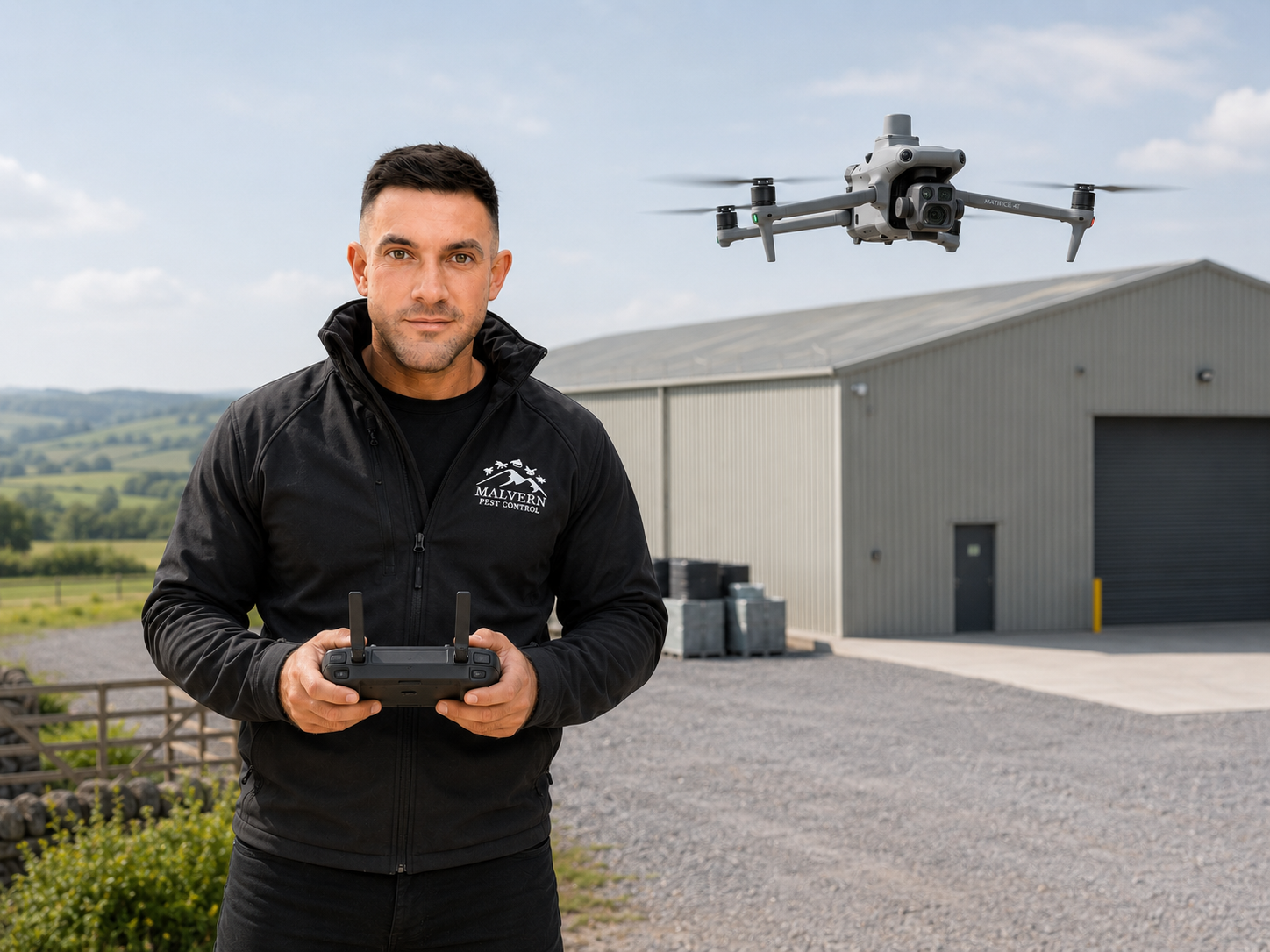
Thermal Drone Pest & Building Surveys Covering Worcestershire, Herefordshire and Gloucestershire.
Launching soon
We’re adding thermal drone surveying to our commercial services across Worcestershire, Herefordshire and Gloucestershire. Register your interest and we’ll be in touch the moment we go live.
Thermal drone surveying turns the heat coming off a building or site into clear, actionable data — locating pest nests, roosting birds, hidden moisture and heat loss from the air, with no scaffolding, no cherry-pickers and no one leaving the ground. When we launch this service, we’ll bring something most drone operators don’t: the trained eye of an established pest control company that knows exactly what a heat signature means.
Pest & wildlife detection from the air
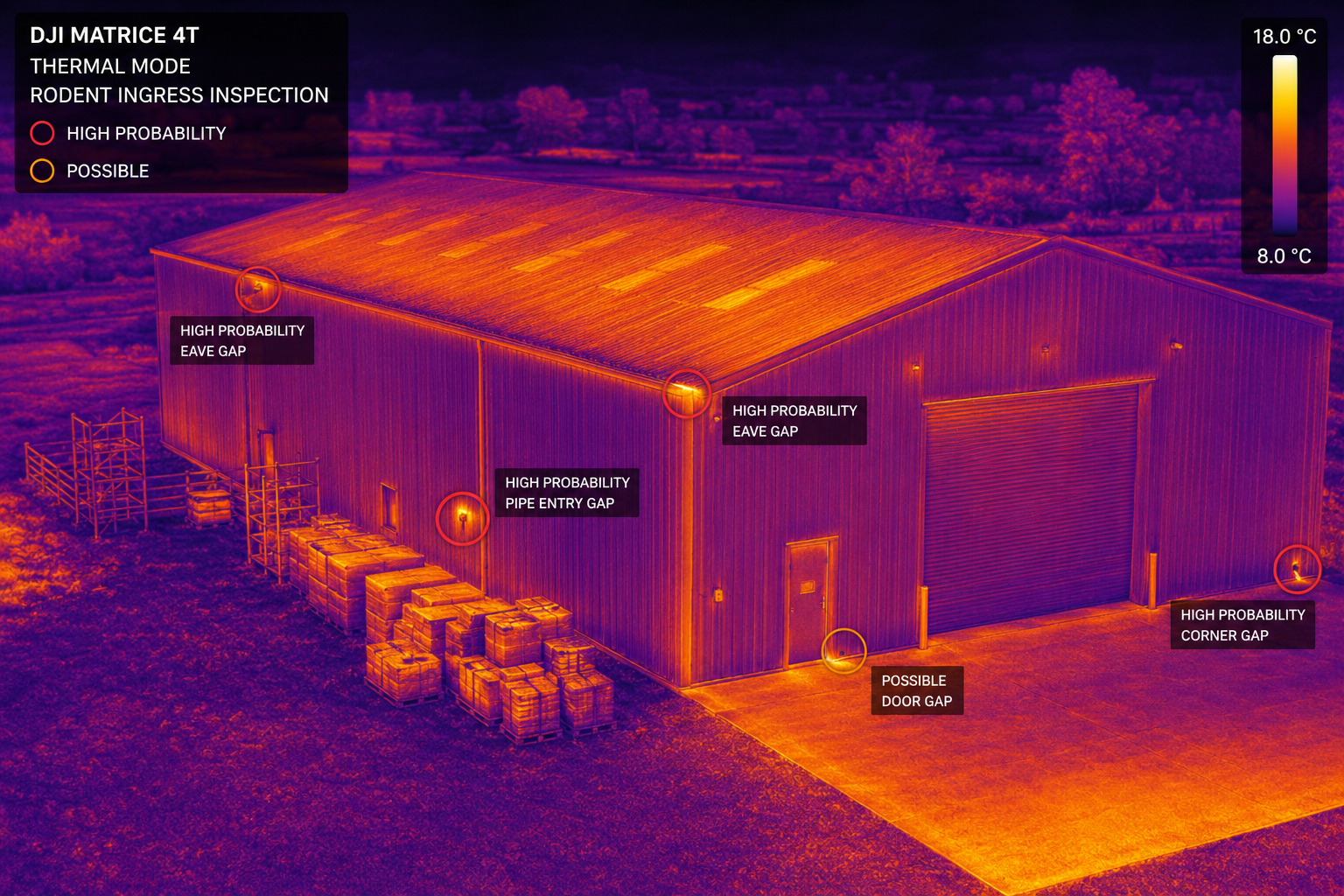
This is where a thermal drone will earn its keep for property and facilities teams. Flown over a roofline, elevation or large site, a radiometric thermal camera reveals the warm signatures that give pests away — quickly, safely and without disturbing them:
Wasp and hornet nests. Established colonies generate enough heat to show clearly on thermal, including nests tucked into soffits, eaves and roof voids that are dangerous to reach by ladder.
Rodent harbourage. Long-established rodent nests warm the surfaces around them, helping pinpoint activity on high roofs and ledges.
Bird roosting and nesting. Pigeons and gulls nesting on rooftops, ledges, signage and beneath solar panels — a common and costly problem — located without dismantling anything.
Other warm-blooded wildlife. Squirrels, bats and similar show up reliably on thermal, including at dusk and in darkness when they’re most active.
Proofing checks. Inspect existing netting, spikes and wires for damage and gaps from above, so you know your deterrents are still doing their job.
Building & roof thermal surveys
The same survey will read the health of the building itself — and the two go hand in hand, because the damp, warmth and gaps that thermal reveals are usually the very things that let pests in:
Heat loss and missing or settled insulation across roofs and facades.
Trapped moisture and water ingress beneath flat-roof membranes, often well before it shows internally.
Damp tracking and cold spots that point to building-fabric problems.
Electrical and mechanical hotspots on commercial plant and systems.
Why it’ll be different from a general drone operator
The difference: we know what we’re looking at
A drone pilot can give you a colourful thermal image. We’ll give you a diagnosis. As an established pest control company, we won’t just capture the data — we’ll interpret it, tell you what’s pest, what’s building fabric, and what to do next. Footage alone isn’t a survey; expert interpretation is what makes it worth commissioning.
Speed and access. A large roof or site that takes days on foot will be covered in hours, with no disruption.
Lower access costs. No scaffolding, MEWPs or cranes — and none of the hire cost, permits or planning they bring.
Safer. No one works at height. Dangerous nests located before anyone goes near them.
Integrated solution. Find the problem from the air, then have it treated by the same trusted local team — survey and solution under one roof.
Honest about what thermal can — and can’t — detect
We’ll always set the right expectations. Thermal cameras read surface temperature; they don’t see through walls. They’re excellent at finding things that generate or hold heat — large wasp and hornet nests, established rodent nests, roosting birds and wildlife, and moisture or insulation faults. They can’t reliably detect small or individual insects such as cockroaches, ants, carpet beetles or bed bugs, which produce no usable heat signature and need a conventional inspection. Where that’s the right approach, we’ll tell you — and we can carry it out, because pest control is what we do.
Who it’ll be for
Facilities and property managers with building portfolios.
Commercial landlords and managing agents.
Industrial, warehouse and manufacturing sites.
Retail and leisure premises with rooftop bird or roosting problems.
Estates, farms and large rural premises.
Be first to know
Thermal drone surveying is launching soon across Worcestershire, Herefordshire and Gloucestershire. If you manage a commercial property, solar site or large premises and want a faster, safer way to find pests and building faults, register your interest and we’ll add you to our list — you’ll be among the first we contact when we go live.
By submitting this form you agree we can contact you about our thermal drone survey service. We'll only use your details for this purpose and won't share them. See our Privacy Policy for details.